
How to Plan a Warehouse Space
Getting your warehouse layout right from the outset makes a significant difference to how efficiently your operation runs day to day. A well-planned space reduces wasted movement, speeds up picking and dispatch and makes the working environment safer for everyone in it. Whether you’re setting up a brand-new facility or rethinking an existing one, the process follows the same logical steps.
Start With Your Operational Requirements
Before a single shelf goes up, you need a clear picture of what the space has to do. Think about the volume and type of stock you’ll hold, how quickly inventory moves, how goods arrive and leave and what equipment you’ll need to handle them. A business moving high volumes of fast-turnover products has very different demands to one storing large, slow-moving items.
It’s also worth thinking ahead. Your business is likely to grow, so build a degree of flexibility into your plan rather than designing purely for current volumes.

Map Out Your Zones
Every efficient warehouse divides its floor into defined functional zones. The core areas to consider are:
- Goods-in and receiving
- Bulk storage
- Pick and pack
- Dispatch and loading
- Returns processing
- Staff and welfare areas
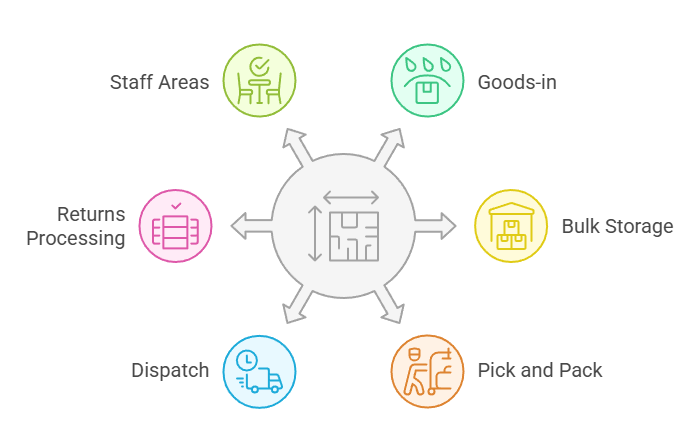
Keeping these zones clearly separated reduces congestion and minimises the risk of errors. Goods should flow in one logical direction through the space (ideally in one end and out the other) rather than crossing back and forth.
Think Vertically, not Just Horizontally
Floor space is only part of the equation. Many warehouses will leave valuable vertical space unused when racking systems could expand storage capacity without needing to increase the building’s footprint. Check the clear internal height of your unit and consider whether high-bay racking, mezzanine floors or multi-tier shelving would work for your stock profile and handling equipment.
Factor in Your Equipment and Access Routes
The equipment you use (whether that’s counterbalance forklifts, reach trucks, pallet movers or conveyor systems) dictates the aisle widths you need. Narrow-aisle racking can maximise storage density, but only if your equipment is suited to it. Build your layout around realistic traffic flows and never underestimate how much safe space, clear walkways for pedestrians require.

Comply with Health and Safety Requirements
Warehouse planning in the UK must account for relevant health and safety legislation, including adequate fire escape routes, emergency exit clearance, appropriate lighting and ventilation and safe road limits for floors and racking. Getting these right at the planning stage avoids costly changes later.
Review and Refine Over Time
A warehouse layout is rarely a one-time decision. As your stock profile, order volumes and processes evolve, the layout should evolve with them. Build in regular reviews and stay open to reconfiguring zones as the business changes.

Finding the right space to begin with is the foundation of all of this. At Warehouse Space, we help businesses find the ideal warehouse unit for their specific operation needs, so the planning process starts from a solid base. Get in touch today and we’ll help you to find the warehouse that’s right for you.