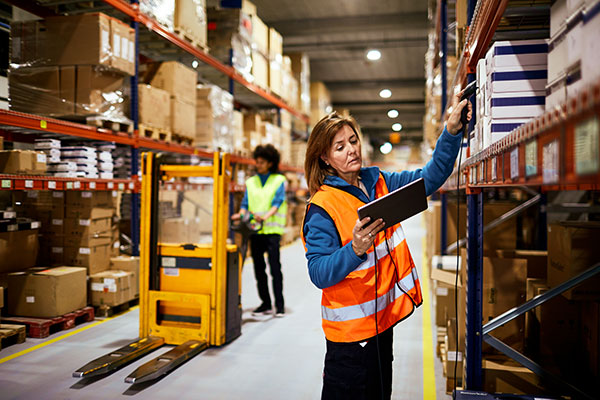
What are the Four Basic Functions in a Warehouse?
Warehouses do much more than just “store things”. They are carefully organised environments designed to keep goods moving efficiently, accurately and safely. Here at Warehouse Space, we help businesses to source the ideal warehouse facilities for this business and understanding the core functions of a warehouse is a helpful starting point when deciding what type of space you will need. While every site is different, most warehouses are built around four basic functions: receiving, storage, picking and dispatch. Getting these right is essential for keeping service levels high and costs under control.
1) Receiving (Inbound)
Receiving is the point where goods arrive at the warehouse from suppliers, manufacturers or other distribution sites. It’s an important stage because the quality of the inbound process affects everything that follows. If deliveries are checked, recorded and put away correctly, you reduce the risk of stock errors, damage and delays.
Receiving typically includes unloading vehicles, inspecting goods for condition and quantity, verifying paperwork and booking stock into a warehouse management system (WMS). Many operations also include labelling, basic quality control and sorting items into the right flow.
2) Storage (Put-away and Hold)
Once goods are received, they need to be stored in a way that makes them easy to find, safe to handle and cost-effective to hold. Storage isn’t just about having enough space, it’s about using that space well. This is where different racking types, aisle width, pallet locations, mezzanine flooring and temperature control can all make a huge difference.

3) Picking (Order Fulfilment)
Picking is the process of selecting the right items from storage to complete a customer's order. In many warehouses, this is the most labour-intensive activity and often the largest controllable cost. Speed matters but accuracy matters even more — especially where returns, service level agreements or retail compliance are involved.
Picking methods can differ depending on the range of products, the order profile and amount. Common approaches include single-order picking, batch picking, zone picking and the use of automation, such as conveyors.
4) Dispatch (Outbound)
Dispatch is the final stage, where picked orders are checked, packed and shipped. This stage makes sure goods that leave the warehouse are correctly packaged, accurately documented and on the right vehicle at the right time.
Outbound processes might include final quality checks, packing and palletising, weighing, adding shipping labels and finally loading. It also involves working together with couriers or in-house transport teams to meet cut-off times and delivery schedules.
At Warehouse Space we proudly source warehouse facilities that match your operational needs, whether you require high-bay pallet storage, e-commerce picking space, food-grade conditions or flexible short-term capacity. If you’re reviewing your current site or planning for growth, get in touch with our team. We’re here to help you find a space that works as hard as you do.